
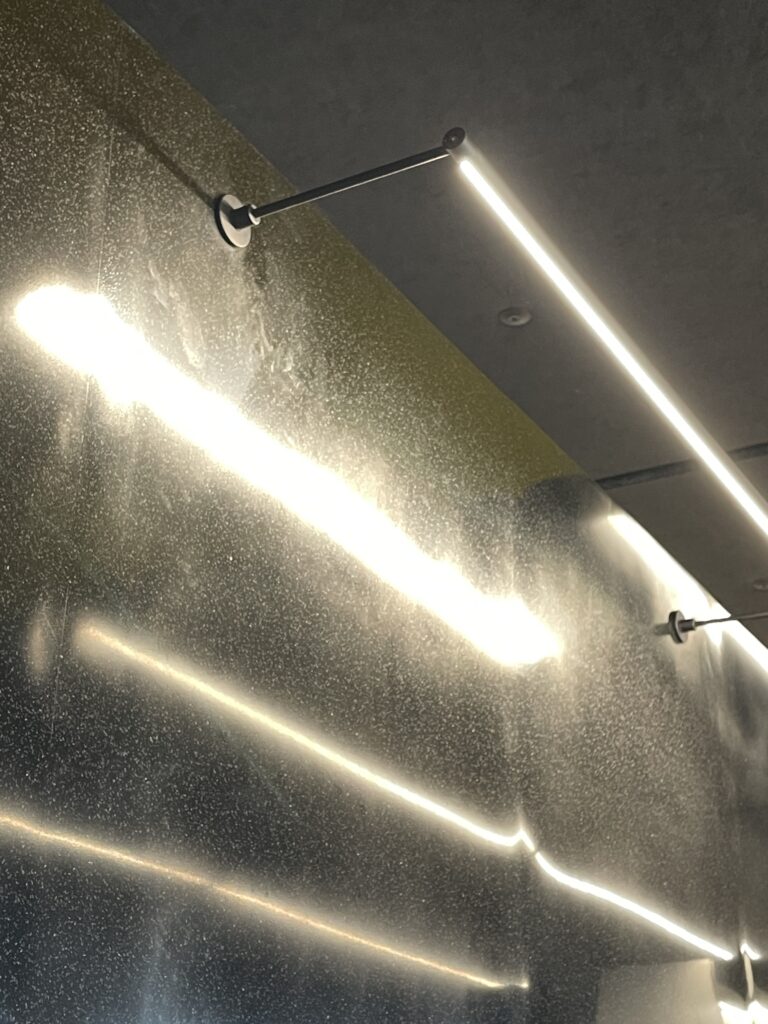
White ceilings and walls are boring, right? Commercial spaces need color to attract customers or make the environment interesting for the users. Sometimes retail spaces require black ceilings to make the HVAC or piping disappear so the focus can be on the merchandise. Plus, a dark ceiling or wall can hide imperfections.
The LRV of finishes
One thing to consider when doing photometrics is to model the expected light reflectance value, or LRV, of the ceiling, wall and floor. The default reflectances we use are 80% for ceilings, 50% for walls, and 20% for floors. However, if you have a dark-painted ceiling or wall, it is best to model the LRV very low or as close as possible to the actual paint color LRV.
Light only makes its way around a space by reflecting off surfaces until the light stops. This is modeled as radiosity in lighting software, which takes into consideration the direct light exiting the light fixture and also any reflected light bouncing around the space. Light will travel until something stops it. When you have dark finishes, the light stops traveling almost immediately and any interreflected light is decreased.
High gloss finishes
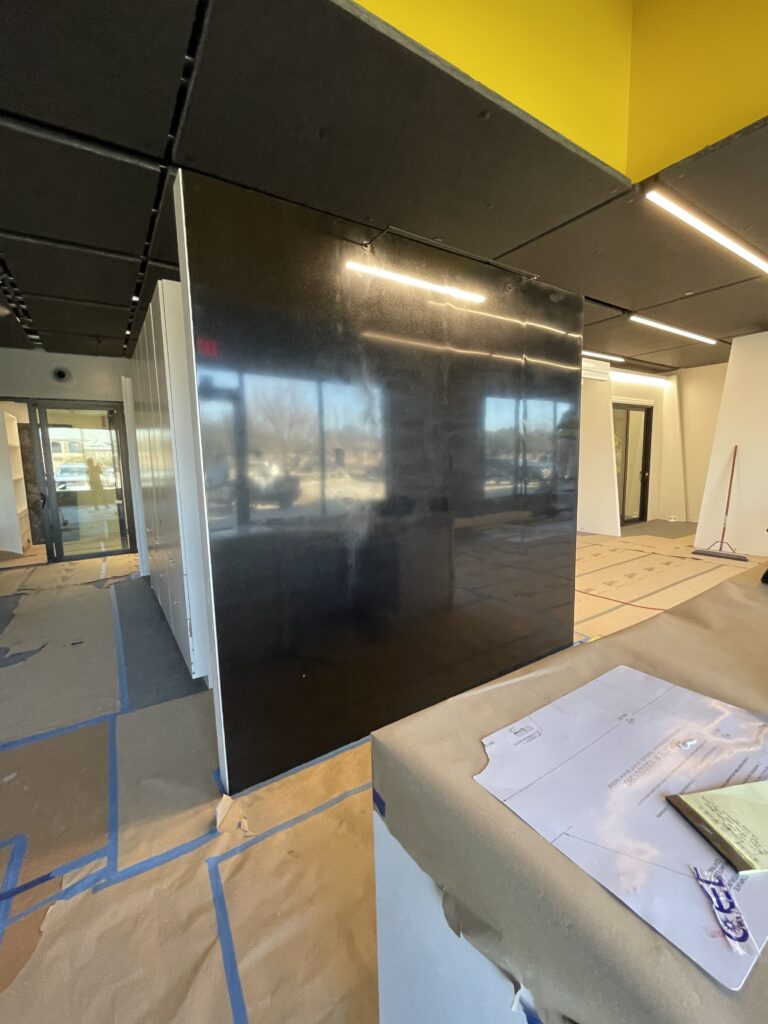
High gloss finishes are also something to be cautious of when lighting a wall or space. If a light fixture is pointed directly at a shiny surface or washing a shiny surface, you will see unwanted reflections. In the photo above, signage will be added on this wall which will help eliminate some of the reflected glare. By definition, reflected glare is the reflected image of a bright light source from a specular (shiny) surface (Wolsey & Miller, 1994).
Perception is everything
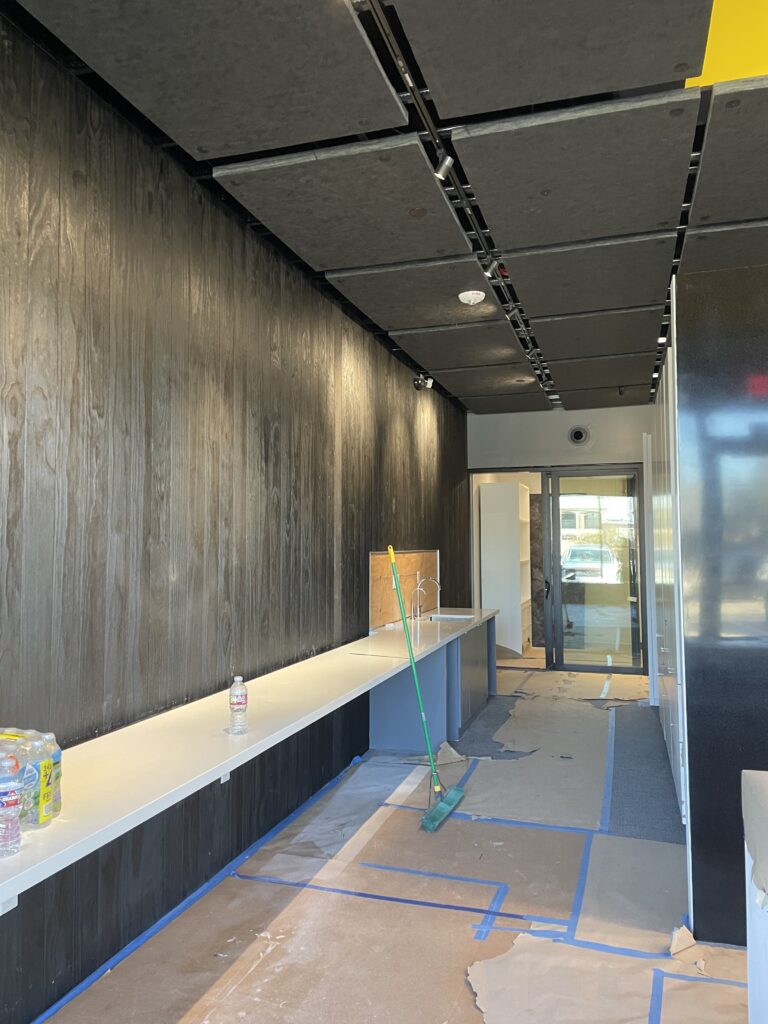
The photo above was taken with my iPhone, so the phone tends to lighten up photos on its own. Plus, we had daylight coming in behind us. Being in the space, though, it felt a little dark. Sometimes the specifier or owner will say “It feels dark.” Or maybe they cannot pinpoint why they do not like a space but something feels off. In this case, we decided it would be best to add more track heads because of the dark ceiling, walls and floor. We tested it out by adding six additional track heads and re-aiming them more down and it was a huge improvement.
References:
Amerlux. (2019, February 21). 4 things architects should know about lumens vs. perceived brightness. Amerlux Blog. https://blog.amerlux.com/4-things-architects-should-know-about-lumens-vs-perceived-brightness/#:~:text=A%20space%20dimmed%20to%2050,light%2C%20rather%20than%20perceived%20light.